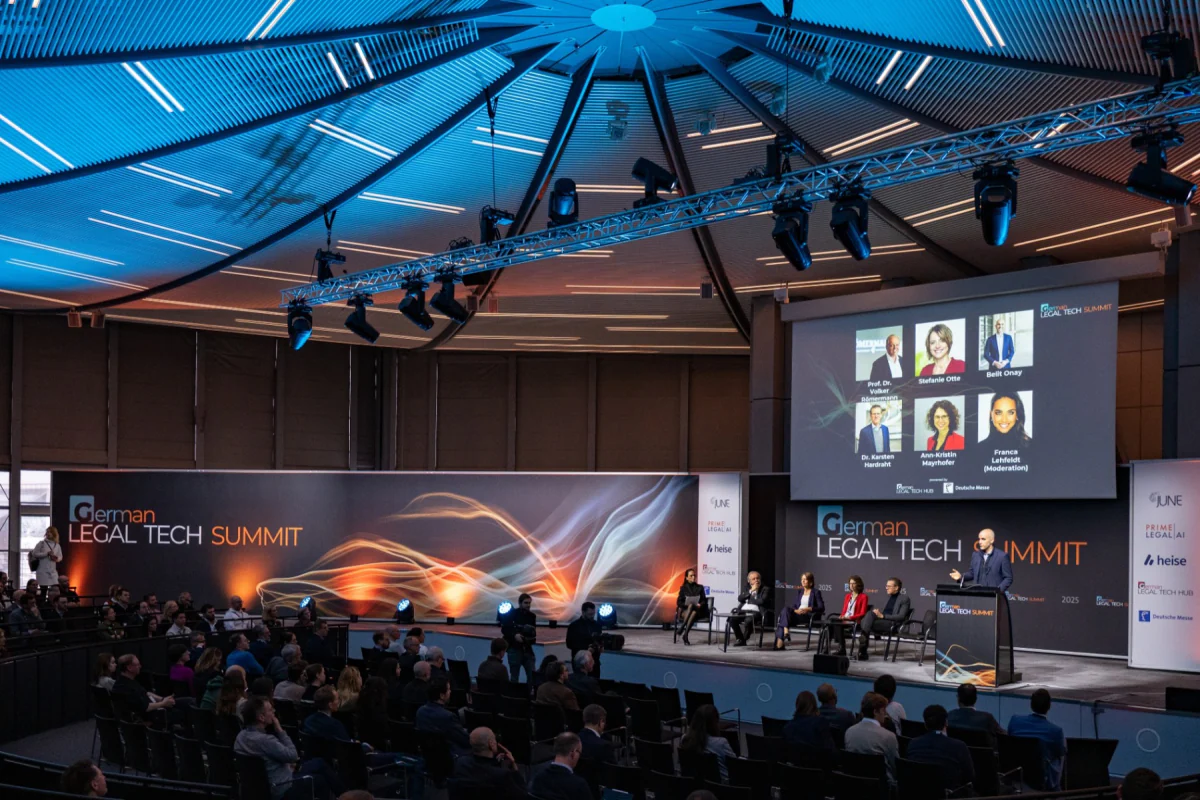
The network for legal tech and AI
Legal Tech and AI. Moving into practice together.
We connect law firms, legal departments, the judiciary and providers. Knowledge and real projects become the next step.
The network for legal tech and AI
We connect law firms, legal departments, the judiciary and providers. Knowledge and real projects become the next step.
We connect law firms, legal departments, the judiciary and public administration with companies, start-ups and experts developing digital solutions and artificial intelligence for the legal sector.
At our roadshows, real-world insights show what these solutions deliver in everyday practice. In the Inner Circle, decision-makers speak openly with one another in a small group. In the focus groups, a fixed group works on a question over several sessions, usually online and based on concrete cases. Everywhere, participants can ask questions, share experiences and make useful contacts – whether they're just getting started or already using new applications.
The network at a glance
Upcoming dateRecap
Last updated: 8 November 2026

Decision-makers from law firms, companies and public administration – in groups we curate with care.
The Concierge knows the market and the providers in the network.
Training with certification under § 15 FAO, insights in the magazine and podcast.

23. November Mon · 12:30
Focus group
Online · Teams
68 places available · free
Register nowThe date at a glance
2nd session of the focus group
The German Legal Tech Hub's “AI-supported administrative procedures” focus group brings together experts from public administration, law, academia and business – for practical exchange at the …

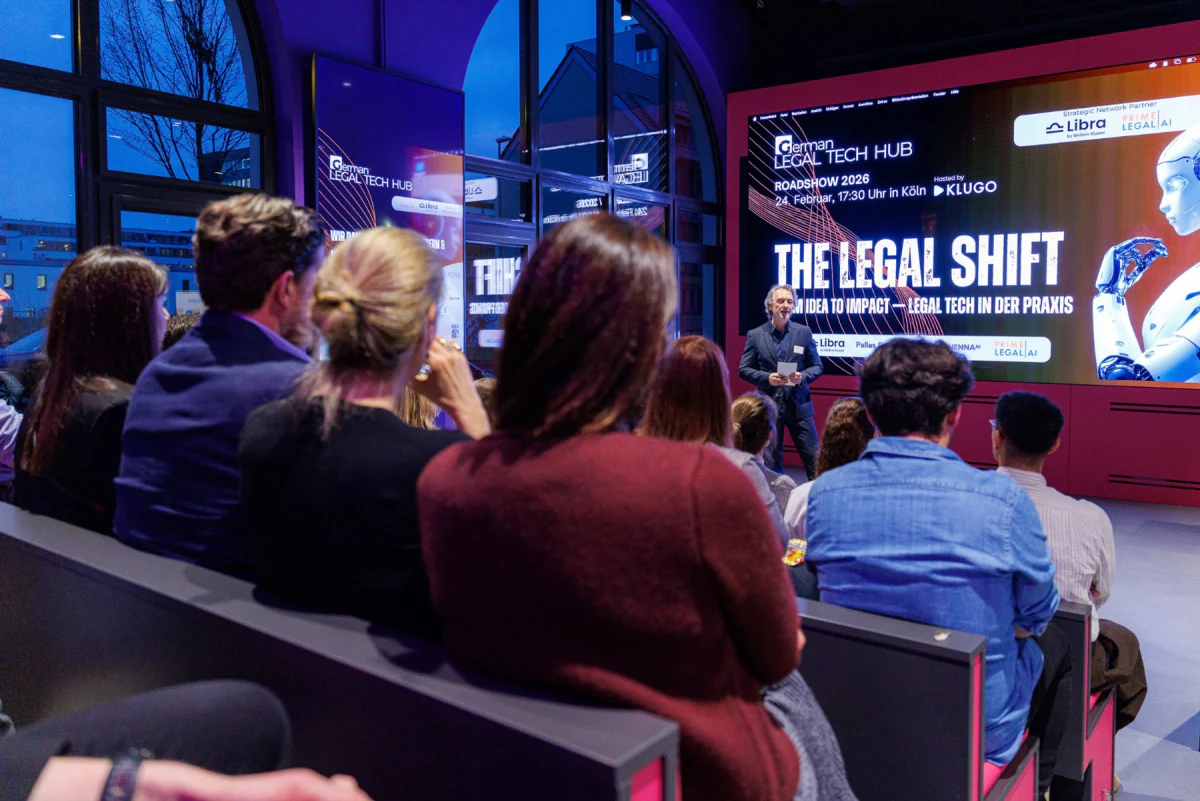
An evening in your region: insights from practice, followed by time for conversation.
ParticipationOpen, registration via the calendar
More about Roadshows
An intimate dinner – open conversations among decision-makers, without a stage.
ParticipationBy request, limited places
More about the Inner Circle
Knowledge-sharing without the travel – from focus groups to TÜV-certified seminars.
ParticipationDepending on format, focus groups for members
More about online formats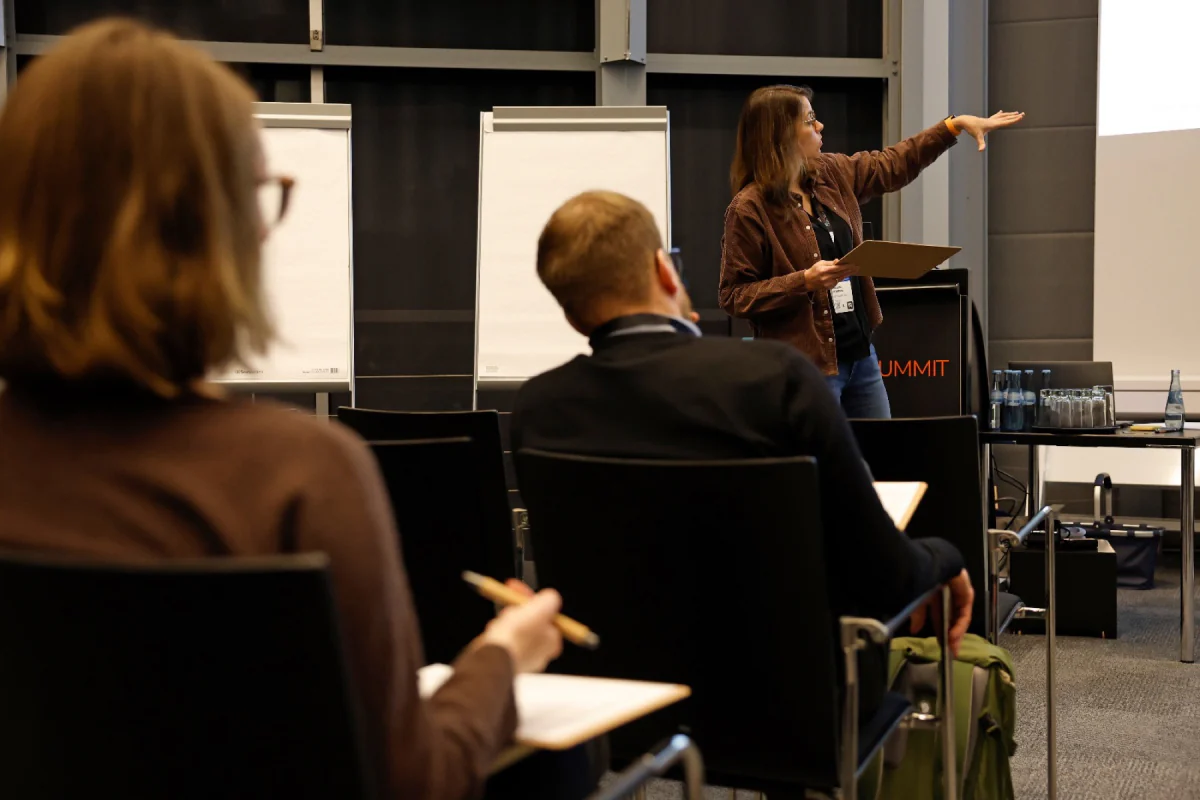
Courses on AI and Legal Tech that make a real difference to everyday work.
ParticipationWith proof of attendance under § 15 FAO
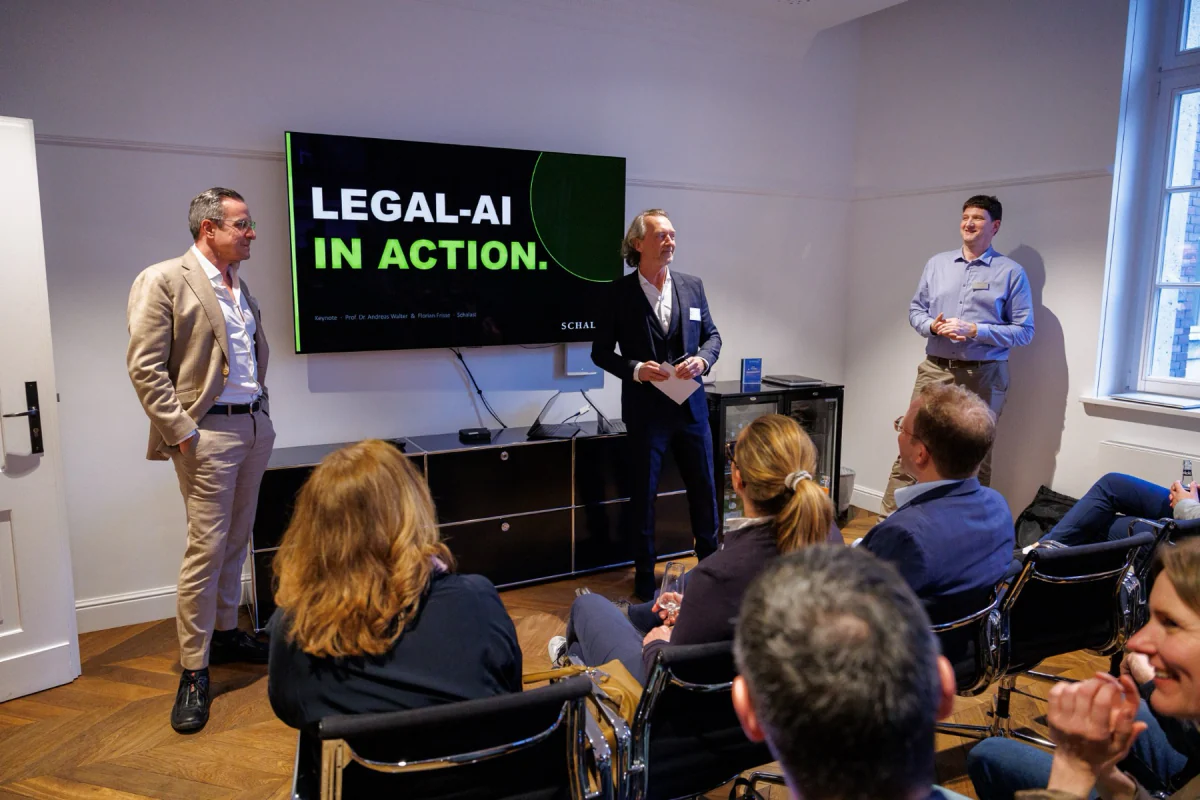
More about the AcademyA legal department is reviewing many similar contracts by hand and is looking for a tool to pre-check standard clauses.
The Concierge matches your needs with providers from the network and arranges conversations with legal departments that have implemented comparable projects.
A conversation between two legal departments using comparable tools – before any tender process begins.
Technology is not an end in itself. It’s about improving our work and our lives.

Microsoft is bringing legal AI directly into Word, the Federal Labour Court (Bundesarbeitsgericht) is drawing consequences from an unchecked AI-generated submission, Freshfields is considering its own AI venture, and Legora raises $550 million. Four developments that have shaped the legal market over the past two weeks.

In this interview, Dr Benedikt Epe Quarch, Co-Director of the German Legal Tech Hub, assesses how far AI has already made inroads into law firms, legal departments, the judiciary and public administration – and explains why he expects day-to-day life in law firms to change significantly within one to two years.

AI agents read statements of claim, carry out research and draft the pleading themselves – with humans only checking at defined control points. What this means for young lawyers, law firms and a judiciary that isn't upgrading at the same pace.
Strategic network partners


Network partners
Members and partners


























Members use the Hub all year round: contacts that last, personal support in finding solutions, and knowledge for their own team.
Already a member? Log in to My Hub
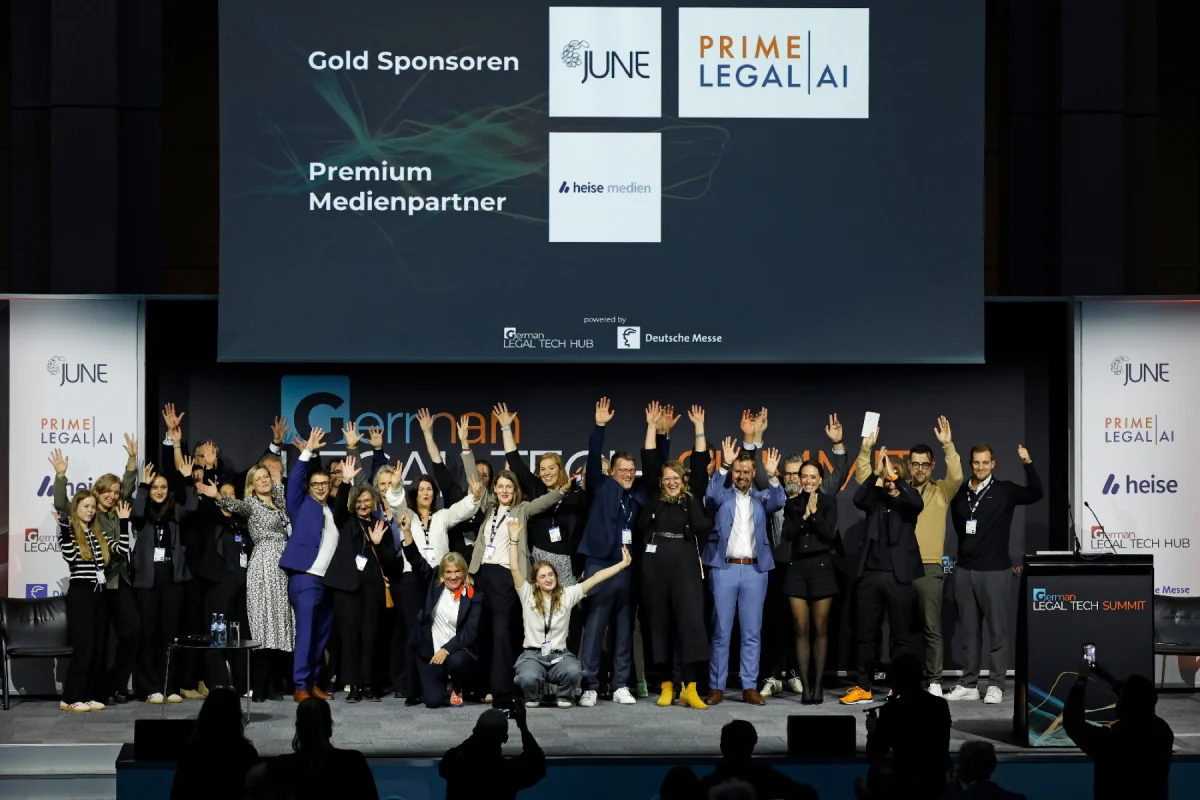
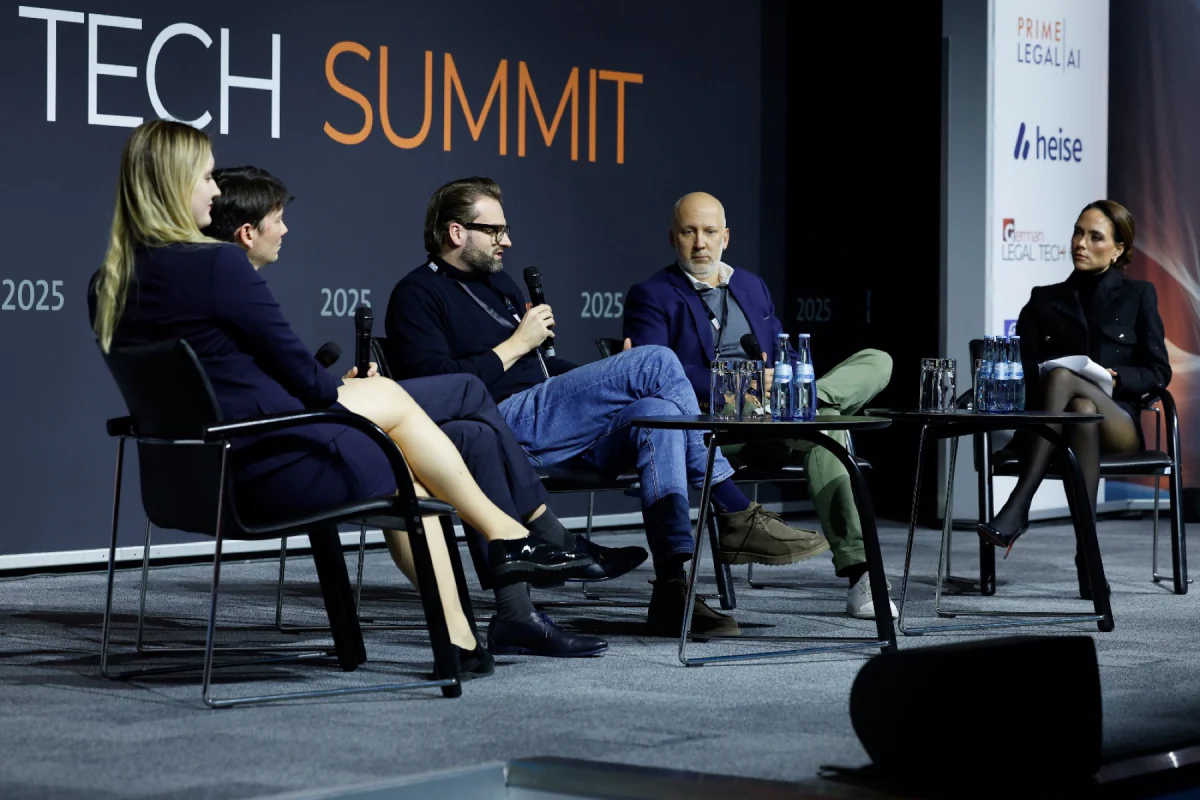
German Legal Tech Summit · 3 December 2026 · HCC Hannover
What begins on roadshows, at dinners and in focus groups takes centre stage at the Eilenriedehalle.
The German Legal Tech Hub is the curated network for legal tech and legal AI in Germany. We bring together lawyers, in-house counsel, legal tech companies, the judiciary and public administration – to connect, learn from one another and shape the future of the legal industry together.
Nationwide. Based in Hannover; events and meetings take place in cities across Germany and online – in 13 cities so far in 2026.
For everyone working in law who wants to put technology to good use: law firms of all sizes, legal departments, the judiciary and public administration, Legal Tech providers, as well as students and trainee lawyers. The formats are designed to bring users and providers into direct conversation.
You can book open formats such as the Roadshows directly in the calendar. For curated formats such as the Inner Circle, you request a place. Members also use focus groups, the concierge service and their benefits, such as Summit tickets.
The German Legal Tech Summit is the annual flagship event in Hannover, hosted by German Legal Tech Summit GmbH. The Hub is the year-round network: Roadshows, Inner Circle, focus groups, Academy and concierge. In 2026, the Summit takes place on 3 December at the HCC Hannover.
Only under the conditions set out in § 43e BRAO: access must be necessary for the service, the provider must be carefully selected and contractually bound in text form to confidentiality. For providers abroad, the level of protection for confidential information must be comparable; if the service directly concerns an individual mandate, the client’s consent is required. The BRAK recommends, wherever possible, only making abstract enquiries and anonymising documents beforehand – simply removing names is often not enough.
According to guidance from the BRAK (as at December 2024), there is no general professional-conduct obligation to do so. However, obligations may arise from the contract or from competition law. The BRAK recommends a transparent approach and, where in doubt, a contractual arrangement.
As a general rule, not within law firms. Annex III No. 8 of the AI Act covers AI systems that assist judicial authorities in establishing and interpreting facts and law – not the legal profession. Regardless of this, the obligation to ensure AI literacy (Art. 4) and the transparency obligations (Art. 50) still apply.
The German Legal Tech Hub is a GmbH based in Hannover. Its managing directors are Jörg Offenhausen, Dr Benedikt Epe Quarch and Dietmar Neidig; the initiators also include Thorsten Ramus, Matthias Hunecke and Roger Cericius. You can find the full team and Advisory Board under Team.
There is no fixed threshold. What matters is whether many contracts of the same type arise and whether coordinated templates are in place. Check whether maintaining the templates is in reasonable proportion to the number of contracts – and who is responsible for that maintenance.
No. Where the law requires written form, only the electronic form with a qualified electronic signature can replace a signature (§ 126a BGB). For some declarations, the electronic form is entirely excluded, for example when terminating an employment relationship (§ 623 BGB). Where no form is prescribed, or text form suffices, simpler methods are enough.
Legally, this is not prohibited by any general rule, but the responsibility remains with you. It is common practice for AI to flag deviations from your own playbook and for lawyers to decide on these deviations. Anyone who approves contracts fully automatically should clearly define the limits and provide for spot checks.
Yes, just on a smaller scale. A single point of contact for enquiries, straightforward billing rules for external law firms, and two or three key figures already create an overview. A dedicated legal operations role isn’t necessary for this.
Where the system is capable of monitoring employees' conduct or performance, an existing works council has a right of co-determination (§ 87(1) No. 6 BetrVG). This should be reviewed regularly for systems that record processing times per person. Clarify this early with HR and the works council.
Often this involves taking stock of the AI systems in use, implementing AI literacy measures under Art. 4 AI Act (in force since February 2025), the transparency obligations under Art. 50 (in force since August 2026), and preparing for high-risk applications, for example in HR. Following the amendment to the AI Act, these obligations apply from 2 December 2027.
German Legal Tech Hub GmbH, based in Hannover, is led by Co-Managing Directors Dr Benedikt Epe Quarch, Jörg Offenhausen and Dietmar Neidig. Since July 2026, the Hub has been funded as an innovation network by the European Union (ERDF) and the State of Lower Saxony.
Become a member – or talk to us first. We usually get back to you within two working days.