Legal AI refers to AI systems that search, summarise, review or draft legal texts. What they can actually deliver depends largely on how they are embedded in review processes, accountability and workflows.
Last updated: · Editorial team, German Legal Tech Hub
ContextWhat it's about
Language models summarise pleadings, research case law, compare contracts against your own standards or draft first versions. In many law firms and legal departments, this happens on an ad hoc basis today: a question goes in, an answer comes out, and the rest of the work carries on as before.
The bigger step is embedding it into processes – matter intake, deadlines, document review, knowledge management. That's where it becomes clear whether AI actually lightens the load or whether the effort of checking it eats up the benefit.
Technically, language models calculate probable sequences of words without understanding their content. That’s why they can invent judgments, citations or facts that sound plausible – so-called hallucinations. Results become more reliable when the system draws on verified sources and substantiates every statement, for example using specialist databases or your own documents (Retrieval Augmented Generation, or RAG).
“Real transformation only begins once AI is firmly embedded in processes.” Dr Benedikt Epe Quarch, Co-Director of the German Legal Tech Hub, in interview, October 2026
Use casesFour use cases from practice
Each case follows the same structure: the starting point, what technology can contribute, the practical benefit, what you should clarify beforehand – and where the limits lie.
1 · Reviewing documents: data room and mass proceedings
Starting point In a due diligence exercise, hundreds of contracts sit in the data room; in mass proceedings, thousands of similar pleadings. The initial review ties up significant time – time that’s then missing for the actual assessment.
How technology helps AI systems read the documents, sort them by type, and extract details such as parties, terms, termination or change-of-control clauses. Notable deviations are flagged. The result is a work list, not an assessment.
Benefit: faster initial screening, with review time channelled into the cases that stand out. According to BRAK guidance, the use of such tools in mass proceedings may, in individual cases, even be organisationally required (§ 5 BORA).
Requirements: searchable documents (text recognition), predefined review criteria, and samples that the team uses to check the results.
Limits: Completeness is not guaranteed. Client files may only be made accessible to a provider under the conditions of § 43e BRAO; where the service directly serves an individual matter, only with the consent of the client (§ 43e(5) BRAO).
2 · Research and drafting submissions
Starting point Preparing an opinion means reviewing case law and literature, condensing it and shaping it into an argument. Getting started takes particularly long in an unfamiliar area of law.
How technology helps AI-assisted research in specialist databases provides an initial overview with references, suggests outlines, and drafts text. Systems that support every statement with a verifiable source are particularly useful.
Benefit: a faster start and a first draft for the team to build on.
Requirements: access to licensed specialist content, fixed review steps before signing, and a trained team.
Limits: Fabricated citations are the best-known risk. The Kammergericht (Berlin Higher Regional Court) has made clear that lawyers must verify cited sources themselves (decision of 20 November 2025, 17 WF 144/25). Errors in AI-generated drafts are errors of the law firm – with consequences for liability and, where automation is extensive, potentially for insurance cover (BRAK guidance).
3 · Making law firm knowledge searchable
Starting point Template pleadings, legal opinions and memos are scattered across drives and document management systems. What someone drafted three years ago often can’t be found by their successor.
How technology helps An internal assistance system searches approved internal records and answers questions with reference to the source document (RAG). According to the Data Protection Conference, such systems can also be implemented using smaller, locally operated models – without transferring personal data to third parties.
Benefit: existing knowledge is reused, helping new colleagues get up to speed faster.
Requirements: maintained and approved records, an access concept that shows client-matter knowledge only to authorised persons, and people responsible for keeping it up to date.
Limits: Outdated templates lead to outdated answers. Transparency, purpose limitation and data subject rights must be maintained throughout the system (DSK guidance on RAG systems, October 2025).
4 · Client intake and initial communication
Starting point Many initial enquiries are similar, but the necessary documents are often missing. Follow-up questions delay the start of the engagement.
How technology helps A digital questionnaire or chatbot captures the facts in a structured way, requests documents, and prepares a summary for the lawyer.
Benefit: more complete documentation at the first meeting, and fewer follow-up queries.
Requirements: clear labelling: from 2 August 2026, AI systems that interact with people must be designed so that people are aware of this (Art. 50(1) AI Act). This also requires privacy notices and approval of the processes by the professionals concerned.
Limits: When used with clients, the BRAK guidance sets a higher standard of care. It must not give the impression that a case-by-case review by a lawyer is dispensable.
FrameworkWhat applies legally
Overview for guidance only, not legal advice. As at: November 2026.
Topic
What applies
Source
Final check
AI may support legal work, not replace it. Results must be checked under one's own professional responsibility.
§ 43 BRAO; BRAK Guidance 12/2024
Confidentiality
Access for providers only to the extent necessary; careful selection; contract in text form with a confidentiality obligation; comparable protection abroad; consent required for services relating to an individual mandate.
§ 43a(2), § 43e BRAO
Criminal law
Those who fail to bind participating service providers to confidentiality can make themselves liable to prosecution if those providers disclose a secret.
§ 203(3) and (4) StGB
Privacy
GDPR and the German Federal Data Protection Act (BDSG) also apply. The Data Protection Conference (Datenschutzkonferenz) has published guidance on AI (2024) and on RAG systems (2025).
§ 43e(8) BRAO; DSK
AI Act
Law firms are generally operators. AI competence (Art. 4) has applied since 2 February 2025, and transparency obligations (Art. 50) since 2 August 2026. According to BRAK guidance, law firm tools do not fall under Annex III No. 8, which concerns judicial authorities.
Regulation (EU) 2024/1689
Informing clients
Under professional conduct rules, there is no general obligation to disclose the use of AI (as at 12/2024). Transparency is recommended, and a contractual arrangement in case of doubt.
BRAK guidance 12/2024
Liability
Errors in AI-generated submissions are attributed to the law firm; courts require verification of citations.
KG, 17 WF 144/25
Roadshows and Inner Circle
What others are already using – straight from the source.
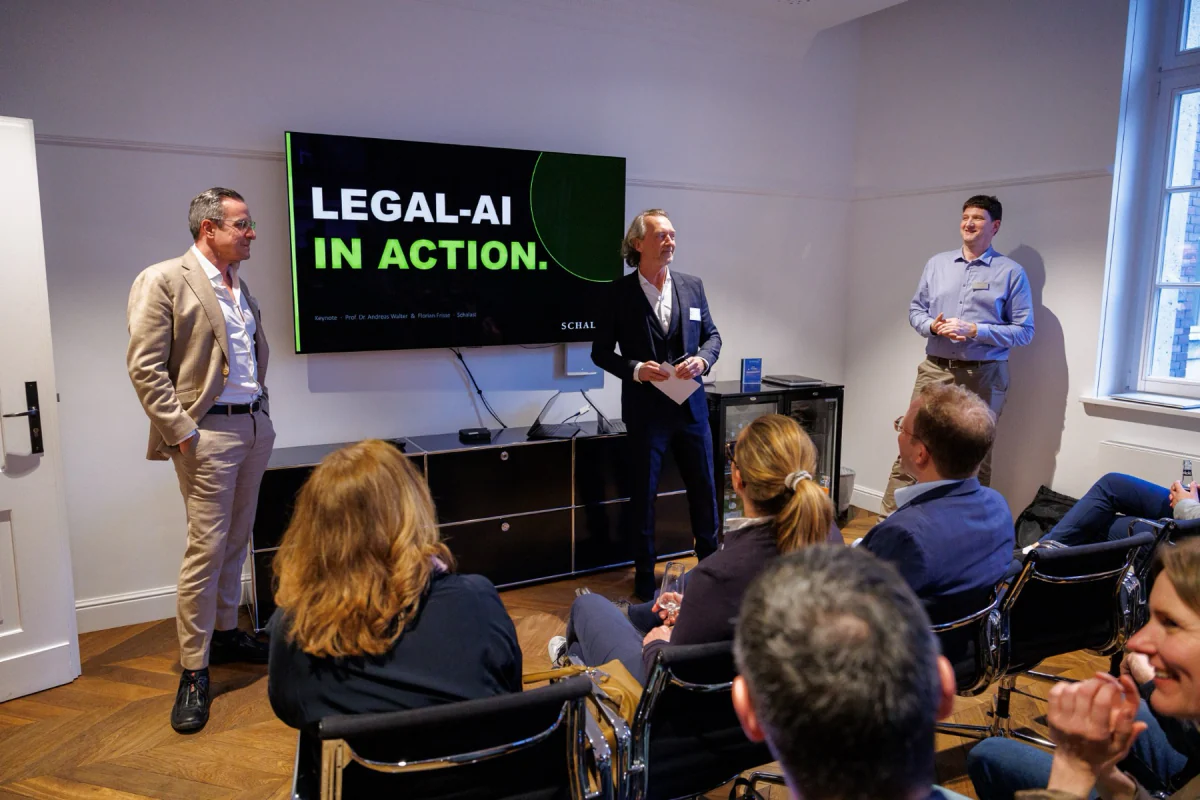
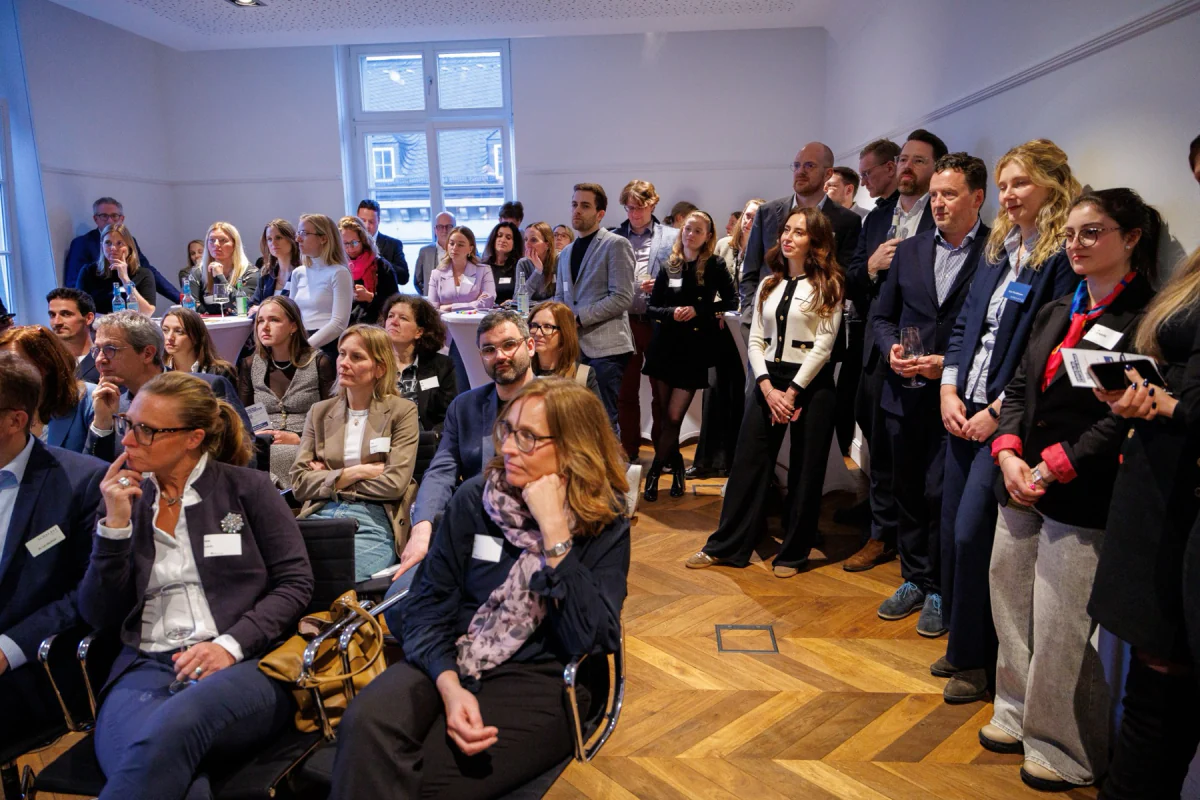
At the roadshows, law firms, legal departments and providers from the region show what works in everyday practice – for example with the talk “Legal AI in Action” in Munich. At the Inner Circle dinners with Blockbrain, decision-makers discuss AI in legal advice openly in a small group. There you can ask what a tool really delivers day to day and how much review it requires.
Academy: Courses such as “AI in Legal Advice” from the previous programme, with attendance certificates under § 15 FAO. The 2027 course programme will follow.
Summit: on 3 December 2026 at the HCC Hannover – also with a certificate of attendance under § 15 FAO.
Dr Steffen Bunnenberg
“Buying AI just because it says ‘AI’ on the label isn’t a strategy.”
A sentence that stays with you.
In this episode, Dr Steffen Bunnenberg discusses why using AI in the legal market takes more than just a language model.
– Where are the strengths of AI – and where are its limits? – Why combining AI with rule-based logic delivers significantly better results. – And why what law firms need most today is a concrete use case, not blind activism.
The legal tech market is evolving rapidly. But after the hype comes the crucial question: which solutions deliver real value in everyday legal work?
Interview: Sebastian Bluhm · Produced by KSB INTAX
Ismael Seck
More on the episode
Can AI write a legal commentary? A question that, just a few years ago, would probably have been met with disbelief. Today, we're discussing exactly that with Ismael Seck, co-founder of Omnilex, a spin-off from ETH Zurich. Omnilex is pursuing an approach that's attracting attention in the legal tech market: alongside conventional AI-supported legal research, the team is developing AI-generated legal commentary – raising one of the industry's key questions head-on:
– How will legal knowledge be created in future? – What role will publishers, commentaries and databases play in an AI-driven world? – And how will legal research change once information is no longer simply found, but intelligently processed?
We talk about, – why Omnilex brings together multiple knowledge sources in a single search, – why AI could fundamentally change legal research, – why access to legal knowledge is often still complex and costly today, – and why the legal market may be on the brink of a transformation similar to that seen in many other knowledge industries before it.
Of particular interest: the discussion about whether AI will in future play a role not only in supporting research, but also in producing legal literature and commentary.
A conversation about innovation, legal knowledge and the future of legal work.
Interview: Sebastian Bluhm · Produced by KSB INTAX
Quick answersFrequently asked questions about Legal AI
May client data be entered into an AI tool?
Only under the conditions set out in § 43e BRAO: access must be necessary for the service, the provider must be carefully selected and contractually bound in text form to confidentiality. For providers abroad, the level of protection for confidential information must be comparable; if the service directly concerns an individual mandate, the client’s consent is required. The BRAK recommends, wherever possible, only making abstract enquiries and anonymising documents beforehand – simply removing names is often not enough.
Do I need to inform clients that I’m using AI?
According to guidance from the BRAK (as at December 2024), there is no general professional-conduct obligation to do so. However, obligations may arise from the contract or from competition law. The BRAK recommends a transparent approach and, where in doubt, a contractual arrangement.
Is Legal AI a high-risk AI system under the AI Act?
As a general rule, not within law firms. Annex III No. 8 of the AI Act covers AI systems that assist judicial authorities in establishing and interpreting facts and law – not the legal profession. Regardless of this, the obligation to ensure AI literacy (Art. 4) and the transparency obligations (Art. 50) still apply.
Sources and further references
From individual test to process.
At roadshows and in the Inner Circle, law firms and legal departments share what works – and what doesn’t. The Concierge service is there to help you find the right tool.